This guide is a purchase-planning reference for US ductless heat pump buyers. It separates the information an online listing can document from decisions that require the exact manufacturer manual and a qualified HVAC professional. We have not installed or physically tested the products in our catalog. Keep the selected indoor and outdoor model numbers together throughout your research; broad family names, lifestyle photographs and nominal capacity labels do not establish that a particular arrangement is right for your home.
Count systems separately from indoor heads
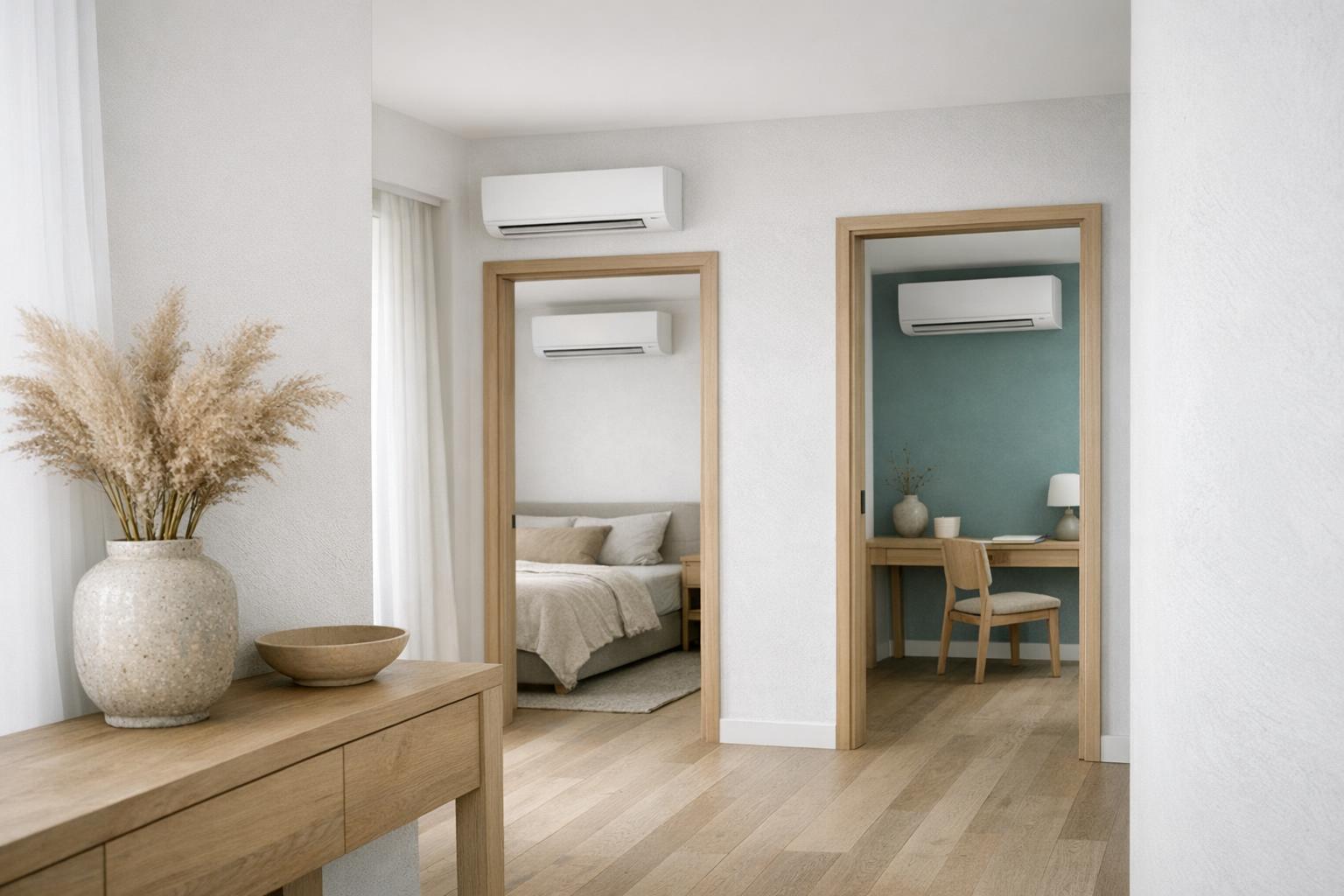
A single-zone mini split pairs one indoor unit with one outdoor unit. A multi-zone configuration connects several compatible indoor units to a shared outdoor system. A listing containing several complete single-zone sets can serve multiple rooms, but that does not make it one multi-zone heat pump. This distinction matters when comparing capacity, electrical work, outdoor space and service consequences. Read the equipment list rather than relying on the number of rooms pictured in a seller image. Record how many condensers and heads are included and the exact identifiers of each before judging two packages as comparable.
For the related decision, read Mini Split SEER2 and HSPF2 Explained and keep those requirements alongside this checklist.
Start with the room pattern
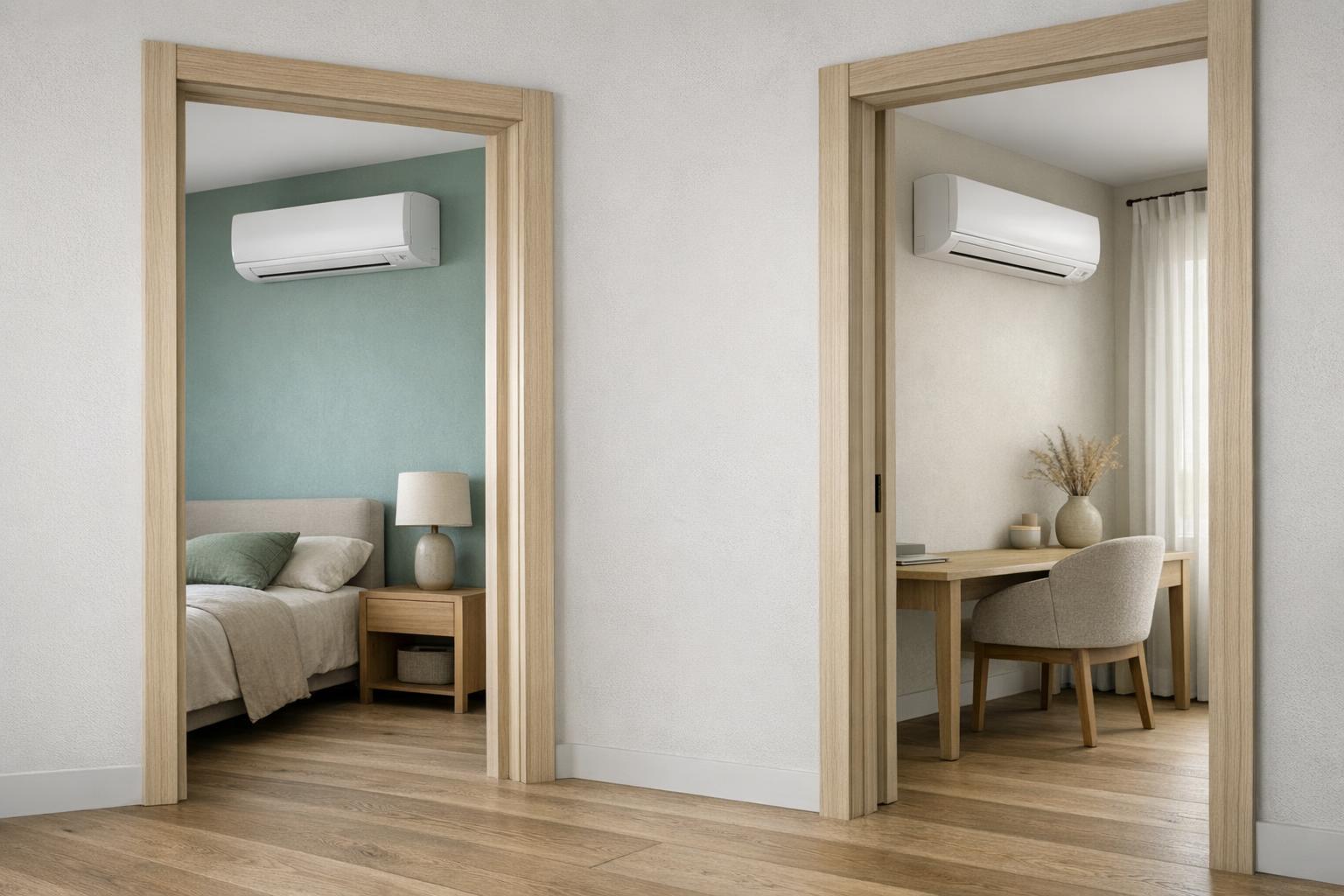
Sketch which rooms need conditioning, when doors are usually closed and whether their schedules differ. One indoor unit in an open room should not be assumed to condition every closed bedroom down a hallway. At the same time, adding a head to each room is not a substitute for a design calculation. Ask the contractor how the layout, room loads and head locations work together. An addition separated from the main house may raise different routing and control questions than adjacent bedrooms. The best architecture depends on those constraints, not on a universal claim that fewer outdoor units or more indoor units is better.
For the related decision, read Mini Split Cold-Weather Performance: What to Check and keep those requirements alongside this checklist.
Understand shared capacity
With a multi-zone arrangement, the outdoor unit is a shared resource. The sum of the indoor nominal sizes may differ from its rated output, and simultaneous operation must stay within the manufacturer's allowed combinations. Ask for the exact combination table used in the quote. Separate cooling and heating requirements, and ask how capacity is distributed under the design conditions. Individual room settings do not necessarily mean every head can heat while another cools; verify the operating modes of the exact system. Never infer advanced simultaneous-mode behavior from the phrase independent control in an ordinary residential listing.
For the related decision, read Mini Split Installation: Questions Before You Order and keep those requirements alongside this checklist.
Compare the installation constraints
A shared condenser may reduce the number of outdoor locations, but routing several lines and drains can introduce its own complexity. Independent systems need separate outdoor placements and associated installation provisions. Ask the installer to compare both approaches with the same room loads, realistic routing and maintenance access. Include the visual impact of indoor heads, line covers and outdoor equipment. Local rules, property restrictions and neighbors can affect placement. This guide does not specify clearances or line lengths; the manufacturer manual and qualified installation design govern those details for the selected models and site.
Think through service and future changes
A shared outdoor system can create a shared point of interruption when it needs service. Independent systems separate that dependency but also create more pieces of outdoor equipment to maintain. Neither fact establishes a universal reliability ranking. Ask who can service the exact brand locally and what warranty support is available for the chosen combination. Future room additions require care: an unused connection or a larger nominal condenser does not automatically authorize another head. Check approved combinations, available capacity and installation conditions before treating expandability as a feature. A change in the building may justify a fresh design rather than a simple add-on.
Compare complete proposals, not head counts
Place two proposals side by side with the same room list and load assumptions. One should not quietly omit a difficult bedroom or drainage requirement to appear cheaper. Confirm electrical scope, commissioning, controls, permits and warranty labor in writing. In our catalog, complete multi-zone listings are separated from accessories and multiple-system bundles, but final combination approval still belongs with the manufacturer and installer. Review-backed rankings help narrow research; they do not determine whether your house is better served by one shared system or several independent units. Keep the design decision separate from the seller offer you eventually choose.
Questions to keep with your shortlist
Before following a purchase link, write down the exact configuration, the document supporting its suitability, the installer who accepts the equipment and any unanswered question from this guide. Check the selected variation, included items, current seller and return terms on Amazon. If an answer changes the design, resolve it before ordering rather than relying on a favorable review to fill the gap. Equipment offers and stock are time-sensitive; our displayed values disappear when their captured validity ends.